Thinking about a new roof for your Wilder home? Here's a practical buyer's guide from a Treasure Valley roofer: the materials worth considering, the parts that should come with every roof, and a simple way to decide.
Give us a few details and we'll schedule a free visit to walk through choices.

Most people buy a roof once or twice in a lifetime, so it's normal not to know where to start. In Wilder, a good choice comes down to three things: how exposed the house is, how long you'll own it and what you want to spend now versus later.
Exposure matters more here than in town-center neighborhoods. A farmhouse with open fields on every side gets the full force of wind, sun and spring hail. A roof that might last 30 years on a shaded street can wear faster on open ground.
Ownership plans matter too. If you're staying for good, a longer-life material may pay off. If you might sell in a few years, a quality architectural shingle is often the sensible pick.
Use the sections below to compare materials, understand what a full system includes and see how we help you choose.
One more tip: don't judge quotes on the bottom line alone. A cheaper bid often skips new flashing, ice barrier or ventilation. Ask every roofer to list the parts, and compare line by line.
If you're not sure your roof needs replacing yet, a free inspection will tell you. A sound roof with a small problem may only need a repair, and we'll say so.
Book a Free Roof ConsultationAll four options can be installed on most Wilder homes. Here's how they stack up for the high-desert climate in western Canyon County. Lifespans are typical and depend on install quality and ventilation. We bring samples of each so you can see them against your Wilder home.
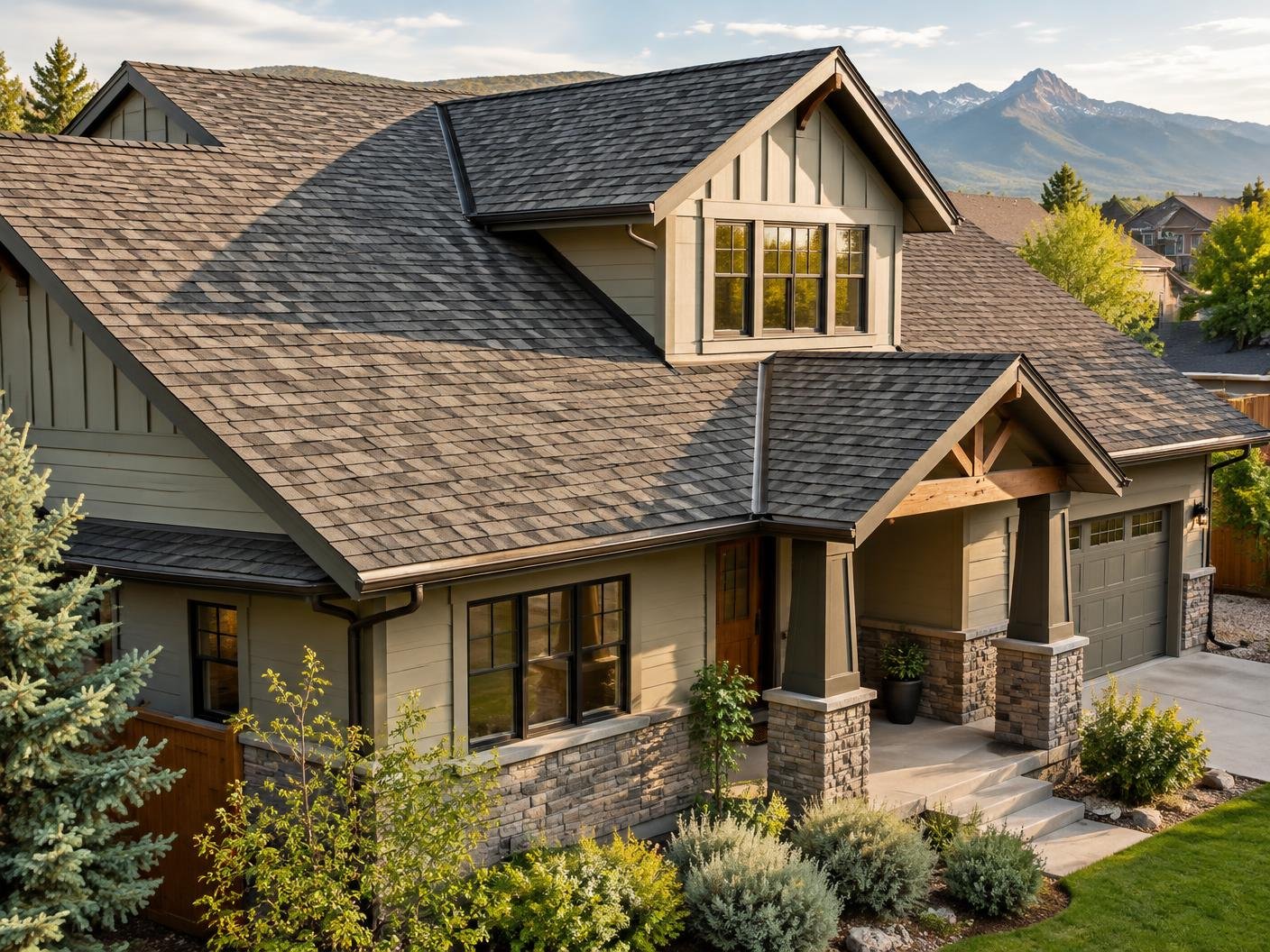
Layered, dimensional shingles with a 20 to 30 year typical life. They handle wind better than older 3-tab styles and come in many colors. The go-to choice for value.
Made to resist hail. Worth a look in a county where the Weather Service measured 2-inch hail in 2018. Ask your insurance agent whether they offer a discount for them.
Metal can last for decades, shed snow during long inversion stretches and match metal-roofed farm buildings. Higher upfront cost, lower long-term upkeep.
The highest fire rating for a roof covering. Many shingle and metal systems qualify. Canyon County's hazard plan notes more wildfire exposure along rangeland and agricultural edges.
Shingles are what you see. These components are what keep water out. Make sure any quote you get lists them.
Damaged sheathing gets replaced, then synthetic underlayment covers the whole deck. An ice and water barrier goes at eaves and valleys where melting snow tends to back up. It also keeps water out if wind lifts a shingle before you notice.
Fresh flashing at walls, chimneys and valleys, new pipe boots and drip edge at the eaves. Reusing worn pieces is a shortcut that often leads to leaks. These small parts cost little but prevent most of the leaks we're called to fix.
Intake at the soffits and exhaust at the ridge. In Wilder's hot summers and cold inversions, good airflow protects the shingles and helps stop ice dams. We calculate vent needs from your attic size, so the system is balanced.
A simple process that keeps you in control of the decision.
Get My Free QuoteLowest cost, longest life, best hail protection or a certain look. Knowing this keeps the options focused. We'll explain which materials fit each goal best.
We inspect the deck, attic and current layers so pricing matches your actual home. We also note anything that should be fixed during the job.
Your quote shows each material side by side, with the scope spelled out. You'll see expected lifespan alongside each option.
Pick a color, ridge vents and any matching work on a garage, porch or shop. We bring samples to view against your siding in daylight.
We confirm the city or county permit, order materials and set your install window. Most installs wrap up in 1–3 days once work begins.
0% interest for up to 18 months, or long-term plans as low as $149 a month, on approved credit. Spreading payments out can make an upgrade to impact-resistant shingles or metal more realistic.
Architectural shingles typically last 20 to 30 years, and metal can go much longer. Open, sunny, windy sites can shorten shingle life, so ventilation and good installation matter a lot. We'll explain which option best fits your site.
They're worth considering. Canyon County has seen hail as large as 2 inches. Impact-resistant shingles cost more than standard ones, and some insurers offer discounts, so check with your agent. Metal also costs more up front, which we'll show clearly.
Over solid decking with underlayment and attic insulation, metal is usually not much louder than shingles. We're happy to explain how it's installed on a typical Wilder home. Underlayment and insulation make a real difference in sound.
Look for tear-off, decking repair allowances, underlayment, ice barrier, flashing, vents, cleanup and permit. If a quote leaves these out, ask. Ours lists them all. Clear scopes make it easier to compare bids fairly.
Often, yes. Shingles need certain temperatures to seal, so we watch the forecast and schedule around cold snaps and inversions. Metal is more flexible in cooler weather. We'll recommend the right timing for your project.
We can. Many owners put metal on both the house and the shop for a unified look. We'll quote each building so you can decide. Matching also simplifies future maintenance.
We put new roofs on homes throughout the Wilder 83676 ZIP code, including farms and rural lots outside town. Homeowners in Caldwell, Parma, Greenleaf and Notus can reach us too.
Learn more about our roof replacement services or see all roofing services.
Get a free inspection and compare real options in writing before you decide.
📞 Call (208) 994-5919 Compare My Roof OptionsRoof replacement, repair and metal roofing across the Treasure Valley. Manufacturer warranties up to 50 years, and still answering the phone after the job is done.
Copyright © 2026 Sage Roofing. All rights reserved.